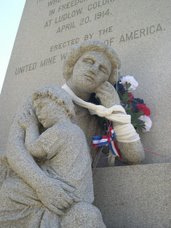
The headline on the front page of the Rocky Mountain News screamed out in the largest font – “Barbaric”.
I thought to myself, which act of barbaric are they talking about? But I knew they meant the beheading of two young American soldiers captured when they ended up alone in one vehicle during an ambush.
Of course it’s barbaric. War is barbaric. Is the beheading of two American soldiers any more barbaric than five hundred pound bombs and cruise missiles being fired into civilian neighborhoods where children used to play?
I have to ask myself how many children died in “shock and awe” before “mission accomplished”? We’ll never really know. We will know in the middle of the night an American in a plane made a decision to drop a payload of bombs on a neighborhood he or she couldn’t even see from their planes. We do know cruise missiles were fired at the command of some commander of ship miles away from the targeted neighborhoods.
The shrapnel of those missiles and bombs without a doubt killed sleeping children. The blasts of the detonation without a doubt left children dead from the force of the blast. Their brains were shaken and their vital organs jarred so that they bled internally until dead.
We now know napalm by another name has been used in villages in Iraq. So have white phosphorus bombs and shells.
Soon we’ll see another naked child in a photo with the burns of napalm on their young body. The memory of “willie peter” from Vietnam makes me enraged some child most assuredly died in agony from the effects of the illegal weaponry.
In subtle ways the children die as well. Lack of potable water creates likelihood of disease. Young children are most susceptible to the diseases of bad water. They get violently ill, vomit, have chronic diarrhea and die. Their electrolytes get out of balance, they dehydrate and they are unable to get enough oxygen.
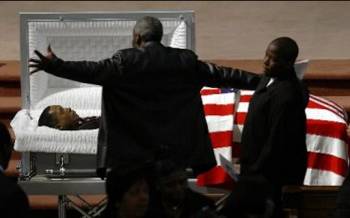
Two American soldiers died a tragic death. The numbers are now over 2500 dead and over 16000 severely wounded. Mothers and fathers mourn for their child. Friends and neighbors mourn. This is the respectful thing to do.
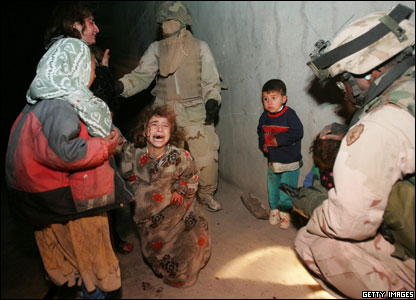
Iraqi mothers and fathers may never find the remains of a child killed in a bomb or missile attack. All visible memory of their child is gone at the funeral. Only pieces of paper with images will remind them of the beauty of their daughter or son.
Iraqi mothers and fathers rush their child to the nearest hospital. They know the disease or the bleeding can be stopped to save their child. They arrive at where the hospital used to be. It too was destroyed by a missile or bomb.
The child will die in the arms of the parents because it’s too late to try another hospital.
These scenes happen day after day after day in Iraq. It doesn’t matter if it’s the Americans in Haditha or Fallujah or the British in Basra or the fanatics who have perverted the Koran in their hatred of the occupation.
Stories of children watching their parents shot down because they failed to stop at a checkpoint are common. American generals and diplomats don’t even say they’re sorry. Sometimes the American government will pay a family a couple of thousand dollars for the loss of a child.
Watching children die isn’t new to the Iraqi people. They saw them die in the thousands when the sanctions against Saddam Hussein were enforced after the Gulf War ended in 1991. Our government knew the sanctions did little to harm Saddam but the loss of vital medical supplies and access to clean water took a tragic toll on the little ones.
Heroic figures like Kathy Kelly had to sneak medical supplies into Iraq while Dick Cheney went around sanctions by using the European branch of Halliburton to sell oil equipment to the government led by Saddam Hussein.
The government still harasses the heroes and heroines who came to know the Iraqi people and knew sneaking vital supplies into the country was a moral obligation. Dick Cheney is our Vice President.
Estimates of up to 2.5 million children died during the years of sanctions from 1991 until 2003. Even if the figures of the skeptics are used thousands of little ones died unnecessarily. I wonder how the American public would react to the deaths of 100,000 American children. Or how would the public react to just a mere 50,000 American young dying needlessly.
It doesn’t take much imagination to envision the American people’s reactions to such a death toll. We need only look at the headlines of the newspapers like the Rocky Mountain News.
I suggested to a friend the Bush people would manipulate the deaths of the two American soldiers just as they did when the three mercenaries were killed and their bodies hung from the rafters of a bridge. While more and more soldiers and Marines are being charged with brutality toward the Iraqi people, the focus of this Administration and the lapdog media is on two soldiers.
Yes, I know all sorts of flag waving Americans will take exception to my words. They’ll think I’m trivializing two American deaths and hate America. I’ve talked with mothers and fathers who had a child killed in Iraq. The pain was palpable and there were no words to comfort them.
I’m a father and grandfather. The very thought of them dying on the fields of death and deceit enrages and saddens me beyond all description.
Barbaric
1. cruel: cruel or extremely brutal
2. uncivilized: uncivilized or unsophisticated when compared to highly developed civilizations ( sometimes considered offensive )
I’m convinced this definition from MSN Encarta omits an important word to describe barbaric. Civilized should also be there. Maybe in this context:
3. civilized: the willful use of technological advances to kill multitudes of people anonymously OR
the inability of educated and prosperous nations to avoid killing thousands to millions in the use of the most advanced weaponry in the world.
As much as the American people would like to deny their cruelty or extreme brutality, the photos and the stories of Iraqi people clearly show the truth.
Americans have gotten used to the role of entitlement and elitism. We value one American life at a far greater rate than any other human’s life. Obviously the going death exchange rate in Iraq is close to 20:1. And still the American people wouldn’t care if there were twenty innocent Iraqis killed by our forces if two American soldiers were brutally decapitated.
Clearly the two deaths will plant a seed in the minds of the people. Unfortunately it will be justification for our occupation of Iraq. They will now see how we must fight the terrorist over there rather than here. And if not justification there will be the revenge factor. The killing of the few dozen in Haditha and elsewhere doesn’t look quite as bad now that we have two soldiers killed in such a barbaric way.
We’ve already slapped the wrist of an officer who stuffed an Iraqi general in a sleeping bag, taped his mouth and hands and sat on him. The general “inadvertently” died.
I truly mourn the deaths of the three American soldiers killed that dreadful day. I abhor the way in which the two captured soldiers were killed. It's not a case of you're either with us or you're with them as the President once said about terrorism. Children are not terrorists. And it isn't only American children dying.
I’m just demanding the next time a five hundred pound bomb hits a house full of Iraqi children the media labels it as what it truly is.
Barbaric.
Wm. Terry Leichner, RN
Denver VVAW member
USMC combat infantryman in Vietnam
Friday, June 23


Thursday, June 22
Looking Forward to the Battlefront Experience
I just received this email (some identifying stuff omitted) from a nursing student a friend of mine met when she was traveling. She led me to believe this man was an outstanding person with great concern about war.
I was startled to get this email which seems to glorify war as a noble thing. My response follows his email.
Hi Terry!
This is Dennis, ……..Got your name from Naomi and she thinks very highly of your experience in nursing and combat. I'm in my third year in Nursing and told her I was looking forward to some experience in the battlefronts. What do you think? Understand you've interesting things to share along that line.
Dennis
Dennis,
Excuse me for being so late in my reply. Unfortunately, I’ve not been keeping up with email due to some other work I’m doing.
Naomi did speak of you in glowing terms.
I was a combat infantryman in Vietnam with the Marines from December 31, 1967 until February 12, 1969. I wasn’t yet a nurse at that time.
I became a RN in 1985 and have worked exclusively with psychiatric services since that time.
I’m real sure I’d not recommend anyone take part in a “battlefront” experience. It’s not all it’s touted to be, by any means. I work with many Iraq veterans in my activism with peace and justice groups and the stories remain the same horrible nightmares as those in Vietnam I had.
There’s an excellent book by Chris Hedges called “War is a Force That Gives Us Meaning”. Hedges eloquently speaks to the myth of war and the narcosis of the experience of war.
Dennis, I know when I walk into a bookstore or library history section I’ll be surrounded by the stories of “heroes” in all the many wars of the world, especially those of the U.S.. If I read a daily newspaper or see a television story about the wars in Afghanistan and Iraq, the American soldiers and Marines are portrayed as heroic.
This tendency to portray war in mythic ways goes back to the Romans, the Greeks and is prevalent in the Christian Bible. If I give a presentation about my experience in war I will talk about the squad leader that threw a fragmentation grenade into a bunker with a crying baby. I’ll talk about the effects of napalm on the flesh of innocent children and civilians. We called them “crispy critters”.
The reality of seeing a traumatic amputation by means of an explosive device destroys all the mythic glory of the historians and the promoters of war. The terror of bombs dropping on cities like Fallujah with children in their homes erases the nobility of the cause.
If you’ve kept up with recent events you no doubt have seen the reports of Marines in Haditha killing dozens of innocent civilians in retribution for the death of a fellow Marine. Now there are more and more similar stories each day. These stories aren’t anomalies or “just a few bad apples” as Donald Rumsfeld would say.
In Vietnam, there were daily killings of innocents by angry young men bent on revenge. Wars such as Vietnam and Iraq are wars of survival and brutality beyond anything imaginable until you get there. You live and fight for your friends. All concepts such as democracy and freedom mean nothing in the face of daily survival.
I met the mother of a combat medic who served in Iraq last evening. She told me how her son went to Iraq hoping to help the people of the villages and cities. That’s what he was told his role would be. His reality was treating the prisoners of the American military that had been interrogated. It wasn’t uncommon for some to die.
He also treated a soldier in his unit that was killed by another soldier in the same unit. I met the mother of the dead soldier. They first told her the death was as a result of “friendly fire” that had accidentally hit her son. The next day they returned and told the mother how sorry they were to misinform her of the reasons for her son’s death.
They told her he had actually committed suicide. A hurried investigation was done and closed with the determination the son had shot himself in the forehead with a M16 rifle.
If you don’t know about the M16, it would take the arm span of a very large basketball player to even reach the trigger of the rifle with it pointed directly at one’s forehead. The mother pressed for further investigation and all signs point to a murder by another soldier with a grudge against the son. All possible witnesses have been transferred or left the service.
I spoke with an Iraq vet last Friday in my home. He told me about seeing a RPG hit a commander flush in the face. It decapitated him. The soldier denies PTSD even though I could pick out several symptoms in just the few hours he was with us. He also told me he fears retribution from fellow soldiers, who after several times of drinking and drugging while on patrol, he reported to command. They were punished by being restricted to quarters for a brief time.
Two happen to be snipers. Threats have been made against this soldier by the snipers and other soldiers in his company. He wants to fulfill his final two years of enlistment but fears being killed by his own soldiers more than the resistance in Iraq.
War will take away part of your soul, Dennis. If you have any sense of morality, it will test all of your morality. It takes your spirit into the depths of hell and many are unable to climb out of that abyss.
I work extensively with PTSD survivors. The traumatic experience of war is like a brand seared into the brain’s memory. The physical changes in the brain caused by the “rush” of adrenaline and other neural hormones are permanent in most cases. The floodgate remains open and this is the etiology of the narcosis of war Hedges speaks about.
Once returned from the intensity of combat all other things pale in comparison. This leads to risk taking and self medicating by many veterans. I chose to work in emergency areas of psychiatric care to continue my rush. And I was good at what I did because an emergency in a hospital or controlled setting was nothing compared to moments of madness in combat.
If you went into nursing with the idealism of helping others heal, war isn’t the place to do it. You’ll find yourself in need of healing after you endure…if you endure….what you see as the aftermath of battle. Yes, they will show documentaries of noble surgeons and nurses caring for the wounded. What they fail to show is the effects upon the care-giver once it is all over.
I have a friend who was a medic in Vietnam that’s never left the jungle. He’s constantly using drugs or alcohol to soothe his soul. My best friend in high school was a medic in Vietnam despite my pleas for him not to enter the military. He shot himself in Vietnam.
I’ve told you only a fraction of the stories that prey upon my mind on a daily basis, Dennis. I sincerely encourage you in your nursing career and discourage you from making the mistake of thinking the “battlefront” is anything other than a nightmare.
Terry Leichner, RN
Vietnam Veterans Against the War
Denver, CO
USMC combat infantryman
I was startled to get this email which seems to glorify war as a noble thing. My response follows his email.
Hi Terry!
This is Dennis, ……..Got your name from Naomi and she thinks very highly of your experience in nursing and combat. I'm in my third year in Nursing and told her I was looking forward to some experience in the battlefronts. What do you think? Understand you've interesting things to share along that line.
Dennis
Dennis,
Excuse me for being so late in my reply. Unfortunately, I’ve not been keeping up with email due to some other work I’m doing.
Naomi did speak of you in glowing terms.
I was a combat infantryman in Vietnam with the Marines from December 31, 1967 until February 12, 1969. I wasn’t yet a nurse at that time.
I became a RN in 1985 and have worked exclusively with psychiatric services since that time.
I’m real sure I’d not recommend anyone take part in a “battlefront” experience. It’s not all it’s touted to be, by any means. I work with many Iraq veterans in my activism with peace and justice groups and the stories remain the same horrible nightmares as those in Vietnam I had.
There’s an excellent book by Chris Hedges called “War is a Force That Gives Us Meaning”. Hedges eloquently speaks to the myth of war and the narcosis of the experience of war.
Dennis, I know when I walk into a bookstore or library history section I’ll be surrounded by the stories of “heroes” in all the many wars of the world, especially those of the U.S.. If I read a daily newspaper or see a television story about the wars in Afghanistan and Iraq, the American soldiers and Marines are portrayed as heroic.
This tendency to portray war in mythic ways goes back to the Romans, the Greeks and is prevalent in the Christian Bible. If I give a presentation about my experience in war I will talk about the squad leader that threw a fragmentation grenade into a bunker with a crying baby. I’ll talk about the effects of napalm on the flesh of innocent children and civilians. We called them “crispy critters”.
The reality of seeing a traumatic amputation by means of an explosive device destroys all the mythic glory of the historians and the promoters of war. The terror of bombs dropping on cities like Fallujah with children in their homes erases the nobility of the cause.
If you’ve kept up with recent events you no doubt have seen the reports of Marines in Haditha killing dozens of innocent civilians in retribution for the death of a fellow Marine. Now there are more and more similar stories each day. These stories aren’t anomalies or “just a few bad apples” as Donald Rumsfeld would say.
In Vietnam, there were daily killings of innocents by angry young men bent on revenge. Wars such as Vietnam and Iraq are wars of survival and brutality beyond anything imaginable until you get there. You live and fight for your friends. All concepts such as democracy and freedom mean nothing in the face of daily survival.
I met the mother of a combat medic who served in Iraq last evening. She told me how her son went to Iraq hoping to help the people of the villages and cities. That’s what he was told his role would be. His reality was treating the prisoners of the American military that had been interrogated. It wasn’t uncommon for some to die.
He also treated a soldier in his unit that was killed by another soldier in the same unit. I met the mother of the dead soldier. They first told her the death was as a result of “friendly fire” that had accidentally hit her son. The next day they returned and told the mother how sorry they were to misinform her of the reasons for her son’s death.
They told her he had actually committed suicide. A hurried investigation was done and closed with the determination the son had shot himself in the forehead with a M16 rifle.
If you don’t know about the M16, it would take the arm span of a very large basketball player to even reach the trigger of the rifle with it pointed directly at one’s forehead. The mother pressed for further investigation and all signs point to a murder by another soldier with a grudge against the son. All possible witnesses have been transferred or left the service.
I spoke with an Iraq vet last Friday in my home. He told me about seeing a RPG hit a commander flush in the face. It decapitated him. The soldier denies PTSD even though I could pick out several symptoms in just the few hours he was with us. He also told me he fears retribution from fellow soldiers, who after several times of drinking and drugging while on patrol, he reported to command. They were punished by being restricted to quarters for a brief time.
Two happen to be snipers. Threats have been made against this soldier by the snipers and other soldiers in his company. He wants to fulfill his final two years of enlistment but fears being killed by his own soldiers more than the resistance in Iraq.
War will take away part of your soul, Dennis. If you have any sense of morality, it will test all of your morality. It takes your spirit into the depths of hell and many are unable to climb out of that abyss.
I work extensively with PTSD survivors. The traumatic experience of war is like a brand seared into the brain’s memory. The physical changes in the brain caused by the “rush” of adrenaline and other neural hormones are permanent in most cases. The floodgate remains open and this is the etiology of the narcosis of war Hedges speaks about.
Once returned from the intensity of combat all other things pale in comparison. This leads to risk taking and self medicating by many veterans. I chose to work in emergency areas of psychiatric care to continue my rush. And I was good at what I did because an emergency in a hospital or controlled setting was nothing compared to moments of madness in combat.
If you went into nursing with the idealism of helping others heal, war isn’t the place to do it. You’ll find yourself in need of healing after you endure…if you endure….what you see as the aftermath of battle. Yes, they will show documentaries of noble surgeons and nurses caring for the wounded. What they fail to show is the effects upon the care-giver once it is all over.
I have a friend who was a medic in Vietnam that’s never left the jungle. He’s constantly using drugs or alcohol to soothe his soul. My best friend in high school was a medic in Vietnam despite my pleas for him not to enter the military. He shot himself in Vietnam.
I’ve told you only a fraction of the stories that prey upon my mind on a daily basis, Dennis. I sincerely encourage you in your nursing career and discourage you from making the mistake of thinking the “battlefront” is anything other than a nightmare.
Terry Leichner, RN
Vietnam Veterans Against the War
Denver, CO
USMC combat infantryman
Monday, May 29
Memorial Day 2006
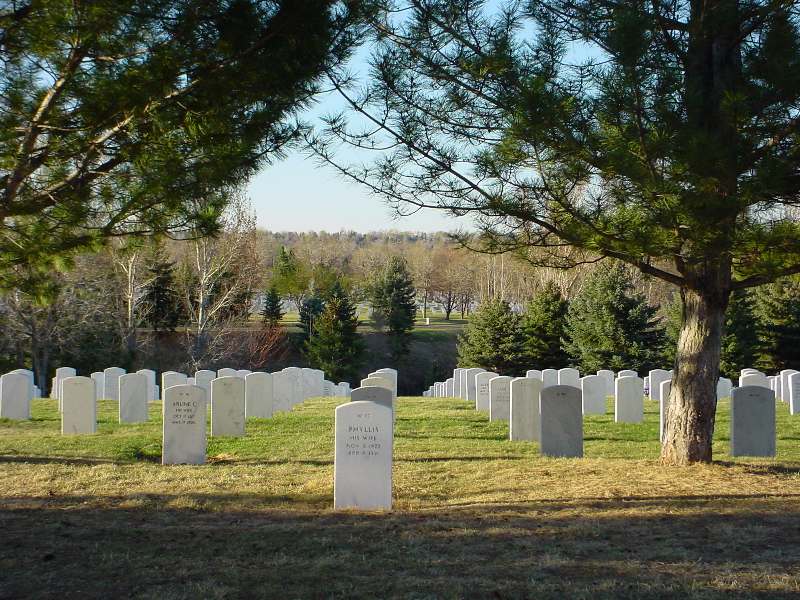
I only set out to get a cup of coffee at the nearest 7-Eleven this Memorial Day morning. My usual routine. Nothing special about the day for me. Too many dead from wars for me to acknowledge this day set aside for the dead soldiers of the American wars.
Of course my choice of bringing Hubert Laws’ cd that included his version of “Amazing Grace” probably wasn’t an accident. Some say there are no such things as accidents. I’m not that certain but I do believe we have unconscious moments of doing things for certain reasons.
As the flute of Hubert Laws started with the song, my emotions got the better of me. This was the same song, same version I had played at the site where we’d taken the ashes of both my parents in the mountains of Colorado.
How many years it’s been since I’ve had parents alive. It seems forever.
I heard a friend talk to her parents this morning and was envious. I realized I miss those conversations with my mom. I miss those times working together with my dad.
Then, my mind went to Vietnam. As it always does. Ft. Logan National Cemetery is less than two miles from the 7-Eleven. I drove my car in that direction. “Amazing Grace” continued to play loudly in my car. Three military jets made a low flyover at the moment I reached the top of the hill overlooking Bear Valley and the cemetery below.
My mind went back to low flying jets dropping napalm bombs that tumbled into tree lines in 1968. The trees erupted into huge columns of flame and thick black smoke. Later, the next day I’d walk through the village next to the tree line.
I’ve told this story thousands of times now and somehow it never gets old and never changes. It’s always the same result. Children charred beyond recognition. Body parts in trees burned black. Blackened areas on the ground where the thatch homes of peasants once housed families.
These are scenes that never leave the mind or the conscience of combat participants. What purpose did we achieve with the horrifying deaths of those children? What honor is there to say I walked through a village of peasants destroyed by an awful weapon of war?
I see the American flag and the red reminds me of blood but not an honorable spilling of blood for higher causes. Just the unnecessary blood spilled of sons and daughters of America and all the nations still unable to refrain from barbaric solutions to differences.
I saw a bumper sticker two or three days ago that read “I’m proud to be an American”. My wife can testify to the anger these words elicited from me. I can’t be proud to be an American. I love this country but I’m not proud of it. It has such potential for good but continues to offset that good with murderous wars perpetrated by callous and uncaring humans.
Memorial Day. Like the 4th of July, I hate the holiday. I’m so very tired of being reminded of the dead from wars of America. I’m tired of pretending we live in a democracy that’s home of the brave and land of the free. All I have to do is go to the nearest city or county jail and ask the inmates why they’re incarcerated. All I have to do is look at their color.
Or I can go next door and find immigrants that have come here to work but don’t have the documents they’re supposed to have. Ilegals. I can’t find the words to describe the revulsion I feel to know my country labels humans as illegal.
I can’t find words to describe my anger seeing young men and women imprisoned for the horror of addictions. Poor and oppressed young people imprisoned for possession of a substance used to numb themselves to the injustices they face.
I guess the addictions of my two sons may be a reason it hurts me so much. I know the pain behind the numbing of the body and soul to the depression of life in a country that fails so many people.
I arrived at a turn off near the fence of the cemetery. The flute of Hubert Laws still played the haunting song of redemption. Will I find amazing grace to save a fool like me? I never feel like I will. I can only think of those days of napalm and firefights.
There’s a line in the movie “Apocalypse Now” when a character says, “I love the smell of napalm in the morning”. It captures the mindset of what it takes to be in combat. You have to give up all the moral values learned as a child. Reality comes quick and with such force it leaves you sobbing and gasping. It takes away part of the soul.
I looked across the rows of the headstones in the cemetery and thought of the young men I saw killed or never saw die after they left with horrible wounds. I recalled the death of my company commander and the tears of embittered and hardened combat veterans. I remembered my friend, Joey, who went to North with me.
The song ended and I pushed a button to play it again. My tears became sobs. I can’t let go of the thought there seems to be no end to this insanity.
Two months ago I spent five days with veterans, family members of children in war, family members who had children killed in our wars and survivors of Hurricane Katrina abandoned by my country.
I heard so many stories that seemed to be the same story that’s been running in my head for thirty eight years. Same story, different characters, different places, different weapons. Same result.
The past week has been filled with information of Marines brutally killing innocent civilians in retaliation for the death of one of their comrades. People around the world are outraged. American people deny this is what normally happens in wars. We’re the “good guys”.
By now the photos of dead children have lost their impact on me. There’s so many it’s difficult to sort each individual out and think of them as the child of a grieving family.
I see a race horse break its leg in a rich man’s sport and I can’t get the image out of my head for days. What the fuck’s wrong with me?
What the fuck’s wrong with this country? We keep coming back to the cemeteries time after time with our tears and our thoughts of despair but we don’t stop the madness.
We put flowers on the graves and tidy up the plot of loved ones but do little or nothing to stop the killing of babies. Genocide, homicide, suicide, matricide, patricide….what the fuck is going on in this world that we can’t stop killing?
Willie Dixon had a song with the lyric,” it don’t make sense we can’t find peace”. He sang about all the potential and many achievements of humans but couldn’t understand why we can’t find peace.
For mothers and fathers with dead children every day is Memorial Day. For children seeing parents brutally killed by bombs bursting in air, each day is a day of remembering. For soldiers and Marines left to live, the memories of death and violence never leave. They remember far too well what they are responsible for doing or not doing.
We don’t need days of memories followed by days of continued death and destruction anymore. We never needed them.
We need to stop having children killing children. We need to spare parents staying up late at night dreading phone calls or knocks on doors. We need to quit numbing our minds to the photos of dead babies.
The song goes, “I once was lost, but now am found;Was blind, but now I see..” What amazing grace it would be for us to finally see
Terry Leichner
Denver, CO
Friday, May 19
Malcolm X, a Voice Still Needed
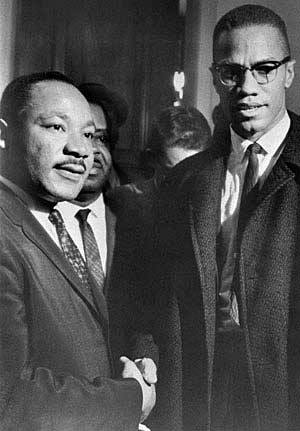
Had he lived, Malcolm X would be 81 today.
Malcolm was the loud and outraged voice against injustice and oppression. He made us uncomfortable with his fiery rhetoric and impassioned thinking.
Malcolm is often portrayed or mentioned as an angry and violent black man. One of his remarks included the phrase, “by any means necessary”. This fragment of his remark is often cited as proof this was a violent man.
The entire quote was, “We declare our right on this earth…to be a human being, to be respected as a human being, to be given the rights of a human being in this society on this earth by any means necessary.”
These words stand the test of time today as they did when he said them. We look at our current society and hear the ugly hate of the Minutemen and Tom Tancredo about Mexican nationals entering the U.S. without documents.
These people who cross into this country for a better life are made out to be criminals and illegals. Few think of them as humans seeking a life better than the poverty left behind in Mexico or wherever they may come from.
I think of Malcolm’s words in context of the people of Iraq. Possibly over 250,000 Iraqis have died since the pre-emptive war perpetrated by George W. Bush and his regime. Close to half of those killed were children. And, today Iraq is less safe than the time of the dictatorship of Saddam Hussein who was funded for many years by American tax dollars.
The dead of Iraq since March 2003 were human beings who deserved to be treated and respected as human beings. The possible million deaths during sanctions from 1991 until 2003 were human beings. A large number were babies and younger children.
Today’s headlines tell of U.S. Marines killing innocent civilians in “cold blood” in Haditha, Iraq.
As in My Lai, the story says one of the Marines had been killed earlier in the day. As in My Lai, the Marines sought retribution and failed to distinguish between the innocent and those who violently fought them.
The citizens of the United States have tired of this war the polls say. A big reason is the cost. Not the human cost but the financial cost. Many, probably the majority, still hold a racist view of Iraqis and humans of Middle East heritage.
Words like “camel jockeys” and “sand niggers” are the more vile things heard. But, even in conversation with Americans thought to be moderate or liberal the words “those people” are heard.
Americans can’t understand “those people”. How could they possibly strap themselves with explosives to commit suicide and homicide they ask? They call them “fanatics” and “crazies” because they resist the American occupation alleged to have a goal of helping the Iraqis.
“"Concerning nonviolence, it is criminal to teach a man not to defend himself when he is the constant victim of brutal attacks." Malcolm X said.
What American wouldn’t resist an occupying force coming to Denver or Des Moines or New York City? Is it unreasonable to think Iraqis might see the brutality of cruise missiles, artillery and tank fire as an attack on their country and them and their families?
Today’s headlines also tell of a riot in the Guantanamo gulag. Prisoners living in conditions of sensory deprivation, lack of privacy and sanctioned torture fought American guards who tried preventing the 4th suicide attempt of the day.
“Human rights are something you were born with. Human rights are your God-given rights. Human rights are the rights that are recognized by all nations of this earth.”
Today, as in Malcolm’s day, human rights aren’t recognized by all nations of this world. The United States of America continues in the ranks of nations lacking humanity for all.
We can also look to New Orleans to have this confirmed. The people in the area Hurricane Katrina destroyed know they were abandoned and treated as less than human. For a brief 15 minutes of media time, so did the rest of the nation.
Seven months later New Orleans and the Gulf region remain much the same. Only half the population still lives in New Orleans. Most of the black community has been dispersed across the U.S.
Developers lust over the possibilities of gentrifying the neighborhoods destroyed. There will be no New Orleans to come back to for many of the poorer citizens. Most from the black community.
“Power in defense of freedom is greater than power in behalf of tyranny and oppression, because power, real power, comes from our conviction which produces action, uncompromising action.”
Today, this 81st anniversary of Malcolm X’s birth, we face harsh choices because we face tyranny and oppression on an unprecedented level in this country. The U.S. lost its final illusion of democracy in a weakly contested coup during the 2000 Presidential election.
No shots were fired before the coup de tat happened. And since September 11, 2001, Americans have freely given up their rights to the un-elected President’s regime. In the name of homeland security, spying on the American people has been officially endorsed. Torture has been officially endorsed. The rules of habeas corpus and the right to a trial have been lost if so dictated by the regime.
The American reaction has been inaction. Fear rules. The people say “if you have nothing to hide, you shouldn’t be bothered by the spying.” People say, “I have the right to be safe and if that takes our government listening to our phone calls or spying on us, that’s ok.”
Fear. More fear. More and more fear. Fear keeps the masses in line and in control.
The mass media is used as a tool to instill even more fear through slanted news coverage and fictional stories of disasters and threats. The people are numbed to the plight of anybody but themselves.
The conviction to produce uncompromising action lies in only a few. Just as it was when Malcolm was alive. Just as it was when Malcolm was assassinated. Just as it was when Gandhi and Martin Luther King were assassinated.
Alleged progressives and liberals still believe the system works and work feverishly to elect politicians complicit with the coup in the first place. They tell us we must carry on a civil dialogue with the uncivil tyrants. They dream up trivializing tactics that hide the outrage we should have against the oppression. Oppression isn’t fun nor can it be made to seem that way as we struggle against it.
Once again it will fall to the impoverished, the marginalized and the betrayed of American society to struggle in uncompromising action against the tyranny.
The privileged and the aspiring privileged will fight to keep mortgaged lifestyles. They will be slaves of the capitalist system that doesn’t recognize human beings. They will be tools of a system that doesn’t respect human rights. And in the end they too will be betrayed.
Already, this aspiring privileged class has lined up the scapegoats of their betrayal. “Illegal immigrants” are stealing jobs from Americans. Duped Americans believe this fiction while corporate America eliminates employment and pensions and replaces the American worker with “offshore” workers.
The workers are exploited for low wages and no benefits. USA, Inc. plunders the world for record profits. The American worker loses homes, cars and the American dream thinking it’s the “wetbacks” and “illegals” that are responsible for the loss. Even in betrayal uncompromising action isn’t on the schedule.
The voice of Malcolm X is missed now more than ever.
Terry Leichner, RN
VVAW
More stories of PTSD and Atrocity
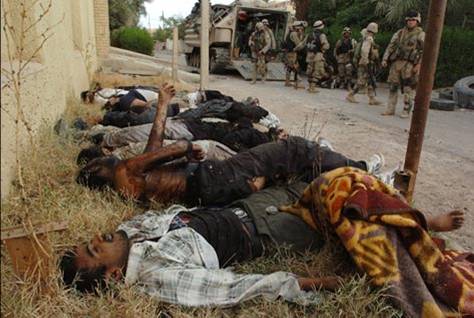
In many headlines today there’s a story about a massacre “in cold blood” in the Iraq town of Haditha back in November 2005. This massacre perpetrated by Marines isn't a new story. It's the story of war. Not just this war, not just Vietnam but all wars.
We take young men and women into our military, indoctrinate them to see citizens of the countries we send them to as hostile, provide them lethal weapons, tell them their unit, their fellow Marines or soldiers are their family and send them to countries without knowledge of culture and clear reasons for fighting. How can we expect anything else to happen??
You would have to be in combat and have one of your "family" members killed to truly understand how the massacre could happen. I don't condone it but I understand it, which is sad for me. I can envision the exact scenario in my mind, unfortunately.
If you think walking away from such a scene of “cold-blooded” murder leaves no scar or problems of conscience read the following story of a Marine that spent time in Fallujah when he returned to the U.S.
We can't allow old men and women to lie to us about the situation in the world and then send our youth to kill in our name...in the name of "freedom". If we want to point the finger of responsibility at the Marines or the soldiers who've killed mercilessly we must also point the finger at ourselves.
We, who sit home and only occasionally express our outrage, are no less culpable than those who put yellow ribbons on the back end of their cars and wave flags and those we send to kill.
For most Americans the war and its effects are but a blip in their daily life. Watching football or the reality programs are the center of many of their lives.
I abhor the atrocities that our young people inflict upon innocent people but when I start pointing a finger of responsibility it will start at the White House, the Congress and the apathetic American public before it will go upon the troops. If we ask someone to kill in our name, we'd better accept some responsibility for the results.
If we oppose the policy of such endeavors as the recent polls indicate, where the hell are the outraged people in the streets? Why are we satisfied with rallies and marches when it's said the world's survival is at stake?
I also keep asking myself where the clergy and the so-called moral leaders are in these times of a culture of violence and death.
The silence coming from the pulpits of the American clergy is staggering. While the Rev. Martin Luther King led people in the streets against oppression, there is hardly a dissenting word from the churches of America today. It saddens me there's such a vacuum of leadership that when we think of the peace movement there's little or no involvement of the Judeo-Christian churches.
While I think each individual is responsible for their actions, I know in a combat situation the individuals are secondary to the whole. The military is the greatest example of mob mentality in wartime. But the true mob is the American people, pumped up by patriotic rhetoric and instilled with fear, allowing their sons and daughters to go off to such insanity.
Mothers and fathers cry and grieve every day in this world as a result of our laziness and apathy. Being nice, being polite, and being less than outraged is not acceptable.
We can't continue to allow the massacres to happen while trying to politely protest the atrocities. The men and women who sent our sons and daughters to war count on the timidity and passivity of the public to achieve goals of domination and oppression.
And their goals are being achieved. And they've redefined torture as being legal. They've redefined our freedoms and liberty as being less than free. They've redefined patriotism as being blind and ignorant compliance. And, unless we act, they’ll redefine our world as we know it.
Terry Leichner
VVAW
-----Original Message-----From: vvawnet-bounces@vvaw.org [mailto:vvawnet-bounces@vvaw.org] On Behalf Of Vietnam Veterans Against the WarSent: Friday, May 19, 2006 7:16 AMTo: vvawnet@vvaw.orgSubject: [vvawnet] Marine Is at Home, but Not at Ease: When he looks at the image that made him a wartime icon, he sees the start of his mental decline
-------- Original Message --------
Subject: Marine Is at Home, but Not at Ease: When he looks at the image
that made him a wartime icon, he sees the start of his mental decline.
Date: Thu, 18 May 2006 22:36:06 -0700
From: Horace W Coleman <hcoleman4@juno.com>
To: vvaw@vvaw.org
As a Marine Corps lance corporal, Blake Miller was with the 1st Marine
Battalion, 8th Regiment, during the assault on the insurgent stronghold
of Fallouja, Iraq, in November, 2004, when this picture was taken.
Filthy and exhausted, he had just lighted a cigarette when an embedded
photographer captured this image, which transformed Miller into an icon
of the war in Iraq. He now suffers from post-traumatic stress disorder.
(Luis Sinco / LAT)
http://www.latimes.com/news/nationworld/nation/la-na-marlboro19may19,0,4643056.story?coll=la-home-headlines
//
/From the Los Angeles Times/
COLUMN ONE
At Home, but Not at Ease
By David Zucchino
Times Staff Writer
8:07 PM PDT, May 18, 2006
JONANCY, Ky. — Growing up in Jonancy Bottom, where coal trucks grind
their gears as they rumble down from the ragged green hills, Blake
Miller always believed there were only two paths for him: the coal mines
or the Marine Corps. He chose the Marines, enlisting right out of high
school.
The Marines sent him to Iraq, and then to Fallouja, where his life was
forever altered. He survived a harrowing all-night firefight in November
2004, pinned down on a rooftop by insurgents firing from a nearby house.
Filthy and exhausted, he had just lighted a Marlboro at dawn when an
embedded photographer captured an image that transformed Blake into an
icon of the Iraq war.
His detached expression in the photo seemed to signify different things
to different people — valor, despair, hope, futility, fear, courage,
disillusionment. For Blake, the photograph represents a pivotal moment
in his life: an instant when he feared he would never see another
sunrise, and when his psychological foundation began to fracture.
Blake, whose only brush with celebrity was as a star quarterback in high
school, became known as the Marlboro Man, a label he detests. That same
notoriety has carried over into his post-Iraq life, where he is an icon
of sorts for another consequence of the war — post-traumatic stress
disorder, or PTSD.
On Nov. 10, precisely one year after the photograph was flashed around
the world, Lance Cpl. James Blake Miller was medically discharged from
the Marine Corps, diagnosed with full-blown PTSD. Three years after
leaving the Kentucky hills for a career in the Corps, he was back home.
He feels adrift and tormented, dependent on his new bride, his family
and his military psychiatrist to help him make sense of all that has
befallen him.
He barely sleeps. On most mornings, Blake says, he has no good reason to
get out of bed. Often, his stomach is so upset that he can't eat. He has
nightmares and flashbacks. He admits that he's often grouchy and
temperamental. He knows he drinks and smokes too much.
"He's not the same as before," said Blake's wife, Jessica, who has known
him since grade school. "I'd never seen the anger, the irritability, the
anxiety."
Blake says he feels guilty about taking money — $2,528 in monthly
military disability checks — for doing nothing. Yet he's also frustrated
that two careers made possible by his military training, police officer
or U.S. marshal, are out of reach because law enforcement is reluctant
to hire candidates with PTSD.
So he broods, feeling restless and out of options: "I'm only 21. I'm
able-bodied as hell, yet I'm considered a liability. It's like I had all
these doorways open to me, and suddenly they all closed on me. It's like
my life is over."
At a local restaurant one night last month, Blake became enraged when he
thought a man was staring at Jessica's rear end.
"I just wanted to grab his hair and smash his head against the table,"
he said later. "I was ready to kill him." But he restrained himself, he
said.
Jessica's grandmother, Willa Fouts, whom Blake calls Mamaw, patted his
arm outside the restaurant and told him: "You've had a few episodes like
that, Blake, where you're just so quick to anger. You need to try to
calm yourself."
Jessica, who graduates this spring from Pikeville College with a
psychology degree, has persuaded her husband to undergo visualization
techniques in which she helps him confront his demons.
"It's understandable that Blake has PTSD, after all he's been through,"
she said. "Ordinary people can't comprehend what it's like to be
constantly shot at and have to kill other human beings. They need to
know what it means to send people like Blake out to fight wars. You're
going to have a lot of people breaking."
Five other members of his platoon of about three dozen have been
diagnosed with PTSD, Blake said. A dozen men from his unit were killed
in action. A Journal of the American Medical Assn. study published in
March found that more than a third of troops who served in Iraq sought
help for mental health problems within a year of returning home.
Sitting in the couple's spacious apartment above a furniture store
outside Pikeville, Ky., Jessica squeezed Blake's hand and told him:
"You've gone through so much, baby, that you just broke."
------------------------------------------------------------------------
Blake was staring at the sunrise. He was on a rooftop in Fallouja,
sucking on a Marlboro and wondering whether he would live to see Jessica
and his father and brothers again.
Luis Sinco, a Times photographer, was crouched next to the corporal,
taking cover behind a rooftop wall. There was a break in the all-night
firefight after an Abrams tank, radioed in by Blake, destroyed a house
filled with insurgents.
Sinco pressed the shutter.
He did not consider the image particularly special. It was the last shot
he filed that day.
The photo appeared Nov. 10, 2004, and was distributed worldwide by the
Associated Press. More than 100 newspapers published it. TV and cable
networks aired feature stories about the Marine's lost, distant look.
Some noted the trickle of blood on his nose — caused not by enemy fire,
but by Blake's rifle sight when it bumped his face.
Blake was unaware that Sinco had photographed him. Two days later, he
recalled, his gunnery sergeant told him: "Miller, your ugly mug is on
the front page of all the newspapers back home, Marlboro Man."
The impact of the photo didn't fully register until a three-star general
showed up in Fallouja. Blake said the general suggested moving him out
of combat for fear that morale would plummet if anything happened to the
Marines' new media star, but he refused to leave. Later, President Bush
sent him a letter and a cigar.
When Jessica saw the photo on the front page of the local paper, she had
not heard from Blake in a week.
"I was glad to know he was alive, but I couldn't stop crying," she said.
"The scared look on his face, his eyes — it tore me up."
In early January 2005, as Blake's unit prepared to leave Iraq, what
Marines call a "wizard" — a psychiatrist — gave a required "warrior
transitioning" talk about PTSD and adjusting to home life. Blake didn't
think much about it until he returned to Jonancy in late January and his
nightmares began.
He dreamed about the 40 enemy corpses that he counted after the tank
demolished the house, he said, and that he had been shot.
"He'd jump out of bed and fall to the floor," Jessica said. "I'd have to
hold him to get him to wake up, and then he'd hug me for the longest time."
Sometimes, Blake mutters Arabic phrases he learned in Iraq or grimaces
in his sleep, and Jessica will keep whispering his name until he wakes
up. Some nights, he doesn't sleep at all.
"I tend to drink a lot just to be able to sleep," Blake said. "Nothing
else puts me to sleep."
He decided last summer to see a military psychiatrist at Camp Lejeune,
N.C., where he was based. In August, he was diagnosed with PTSD. But
before he could be put on "non-deployable status," his unit was sent to
New Orleans to assist with Hurricane Katrina recovery.
While aboard a ship off the Louisiana coast, Blake was taking a
cigarette break when a petty officer made a whistling sound like an
incoming rocket-propelled grenade. Blake says he remembers nothing about
the incident, but was later told that he slammed the officer against a
bulkhead and attacked him.
By November, Blake was forced to take a medical disability discharge.
"They said they couldn't take the risk of me being a danger to myself
and others," he said.
He fears that he may have another blackout. "It's terrifying that at any
moment I could lose control and not know what I'm doing," he said. "What
if next time it's Jessica?"
This February, while smoking a cigarette and staring out Jessica's dorm
room window, Blake said, he thought he saw a dead Iraqi man on the
grass. Later, he had visions of an Iraqi father and son fishing — a
scene he'd witnessed in Iraq just before a grenade exploded nearby.
"I can't tell any more what really happened and what I dreamed," he
said. "Sometimes I feel like I'm dying."
Blake visits a Veterans Administration psychiatrist in nearby West
Virginia and speaks with him by phone several times a week. He said his
psychiatrist told him that his PTSD has to be managed; his disability
will be reevaluated in March 2007.
Meanwhile, he has slowly turned against the war. "We've done some
humanitarian aid," Blake said, "but what good have we actually done, and
what has America gained except a lot of deaths? It burns me up."
Jessica, who sports an "I Love My Marine" sticker on her car, says she
and Blake are behind the troops though they no longer support the war.
The war seems far away in Pike County, a rural region where the median
annual household income is $24,000, far below the $42,000 national
average, and where people still brew moonshine and grow marijuana. The
Hatfields and McCoys fought their notorious feuds here.
Jonancy, just outside Pikeville and about 115 miles east of Lexington,
was named after Blake's great-great-grandparents, Joe and Nancy Miller.
Blake grew up in a hollow called Jonancy Bottom, in a one-story house
next to a creek, where the carcasses of old cars and motorcycles litter
the rear yard. His father, James, a mechanic who sells the parts, keeps
a faded yellow ribbon on the front door, not to be removed until the
last U.S. troops leave Iraq.
Blake is restless and talkative, a boyish young man who speaks with a
Kentucky twang. He will discuss Iraq only with Jessica, said Jessica's
grandfather, Hursel Fouts, known as Papaw.
"I don't think he should keep it bottled up, but I don't try to force
him to talk about what happened over there," Fouts said. His
brother-in-law, Hargis Fleming, a Vietnam veteran, opened up to Blake
about his wartime experiences after refusing to discuss them with anyone
for more than 30 years, Fouts said. Blake seemed buoyed by the encounter.
Blake's military service is literally written on his body; his unit's
motto, "Angels of Death," is tattooed on his right forearm. He had a
life-sized cigarette tattooed on his left forearm last year.
For Hillbilly Days, an annual street festival late last month in
Pikeville (pop. 6,304), Blake shaved his scruffy beard and got a
military "high and tight" haircut. He agreed to help at a Marine Corps
recruiting booth at the festival. Just putting on his Marine fatigue
pants and boots for the first time since his discharge brought back more
memories, and he tried to tamp them down.
He was so worried that the Marlboro Man photo would dominate the
recruiting booth that he begged the recruiters not to display it. He
also persuaded them to remove a large version of the photo that had hung
in the recruiting station in downtown Pikeville.
"I can't stand to look at it anymore," he said. Even so, he says the
photo has provided him a platform to try to educate others about PTSD.
At the festival, Blake's mood brightened as he chatted with the
recruiters. Wearing a Marine T-shirt with the message "Pain is Weakness
Leaving the Body," he was cheerful and animated. He playfully harangued
young men, challenging them to a pull-up contest.
Though he has turned against the war, he said, he often wishes that he
was back in the Corps and with his buddies. He still recommends the
Corps to potential recruits, but advises them that it's a job, not a way
of life. He recommends noncombat positions.
"In order to do your job in combat, you have to lock up your emotions,"
he said. "Basically, you're turning people into killers."
The three-day festival passed pleasantly. Blake worked the booth a few
hours a day, then took long strolls with Jessica. He smoked heavily — he
says he smoked up to six packs a day in Iraq and is down to a pack a
day — and in the evenings they shared cold Coronas with limes, an
unimaginable luxury in Iraq.
They discussed their visualization sessions, particularly one in which
Blake panicked after he visualized a hooded cloak hiding the
/teufelhund/ — the devil dog — a Marine Corps emblem.
"I want you to do it again, but I don't think you trust me enough,"
Jessica told him.
"I'd trust you with my life, baby," he said, "but I'm just not quite ready."
They talked of their upcoming June wedding. They were married by a
magistrate in June 2005, but want a formal ceremony. Blake plans to wear
his Marine dress blues.
They passed a sound stage, where Blake's former high school rock band
was performing.
The lead singer, Kevin Prater, spotted Blake and introduced him to the
crowd.
"He's one of the greatest people in the country," Prater said, inviting
Blake to perform. "He sacrificed for freedom for all of us."
Blake climbed on the stage and grabbed a guitar. He and the band
launched into a Merle Haggard song. With a Marine Corps cap perched on
his freshly shaved head and a Marlboro between his lips, he seemed
pleased and nearly at peace, at least for one night.
--
_______________________________________________
vvawnet mailing list
vvawnet@vvaw.org
http://lists.shout.net/mailman/listinfo/vvawnet
*************************************************************
Vietnam Veterans Against the War, Inc.
(773) 276-4189
e-mail: vvaw@vvaw.org
http://www.vvaw.org
Fighting for veterans, peace and justice since 1967
Wednesday, May 17
Story of PTSD (continued)
The first comment is a mom's response to the story of the soldier in Iowa that killed himself. The second comment is her response to my article. They both talk about her struggles with a son who has PTSD from his experience in the Marines.
From the mother's perspective, I am always asking myself, "am I doing enough?" This story hits so close to home. I think of all the times my son called me to tell me he had a gun in his mouth culminating to the driving the car at 120mph on a curvy road this last christmas, he survived but not even the state patrol could figure out how. He's living with me and is going to start college in a couple of weeks. I can't stop crying. I am so thankful he made it home alive both times, and so afraid he isn't going to survive the PTSD. He won't get help because he doesn't want it on his record. I don't know what to do.
Re: The Reality of PTSD on Communities
Very well said. When the Marines answer to my request for my son to get help was putting him on a graveyard shift on MP duty so he would have a sidearm, I went crazy. I felt like they were telling him to go ahead and finish the job.
Story of PTSD

This is one of the items posted in a group I'm a member of with vets, families, survivors of children killed and Katrina survivors. PTSD is a frequent topic. I'm also going to post the comments of a mom who is a member of the group. She responds to this article and to my article titled "The Reality of PTSD on Communities".
Terry Leichner, RN
VVAW
woke up this morning and grabbed the morning paper, I was surprised
and very saddened to see this very awakening headline, "War shadows
soldier home- then it kills" now I am on a quest to speak with this
family! here is a link to my hometown newspaper
www.globegazette.com ....here is the article:
GRUNDY CENTER — He always intended to be a policeman. To get there —
with his parents' guidance —Josh Omvig became a soldier.
"He was a nice young man," Ellen says.
A mother's pained love.
"He was a pretty straight arrow," Randy says.
A father's wounded joy.
They knew Josh experienced combat in Iraq as an Army reservist. By
connecting the dots, they concluded their son probably participated
vigorously. Too late, they realized the person they got back from
the war on terrorism was not the young man they sent.
Sadly, they say, post-traumatic stress disorder was only a vague
concept until they saw Josh's world unravel.
"In retrospect, we probably should have pushed harder," Randy says.
His tone conveys little confidence the couple actually believe they
could have saved their boy. As they see it, odds weighed heavily
against their son.
"I keep thinking about it," Randy says. "But it was a no-win
situation for Josh."
The soldier told his mother once he died in Iraq. But he kept living
for another year.
Burning desire
Josh, a former Boy Scout with a newspaper route, wanted to join the
military early. His parents refused to sign paperwork required of a
17-year-old and made him wait.
"It is an adult decision. It is seven years of your life," Randy
remembers telling his son.
Later, the couple insisted their son investigate several branches of
the armed forces before making a commitment. And they helped.
"Josh was pretty focused," Randy says.
He enlisted in the 339th Military Police Co. based in Davenport.
"When he signed up, they hadn't been activated in more than 30
years," Randy says.
The choice was logical for an aspiring policeman or sheriff's deputy.
"He figured the best way to get some experience was to go into the
reserves," Randy says.
Josh graduated a semester early from Grundy Center High School.
Within two days he was training at Fort Leonard Wood in Missouri.
The company deployed to Guantanamo Bay, Cuba, guarding suspected
members of al Qaida. But Josh was not yet ready. Meanwhile, he
enrolled in law enforcement courses at Hawkeye Community College.
"But sitting in the classroom was kind of tough on him," Randy says.
Josh seemed to enjoy much more the ride-alongs he arranged with
sheriff's deputies in Tama, Grundy and Hardin counties.
He liked the action part of it," Randy says.
Josh started working for a security company in Des Moines and became
a supervisor. He moved to Altoona.
In 2003, the soldiers in the 339th — back from Cuba — and Josh and
his parents anticipated what lay ahead.
"They kept telling them all summer, `You're going to be activated
real soon,' " Ellen says. "That went on for months."
Josh got ready, had his teeth checked and deposited DNA samples with
the military. Officials activated the 339th once again in December
2003 and the company deployed to Iraq in February 2004.
The soldiers' mission included guarding people and enemy munitions.
At times, they protected convoys. Shifts were 15 hours. Their camp
at one point was mortared daily.
Temperatures inside tents exceeded 100 degrees at night, Josh said,
and soldiers resorted to flea collars on their beds and around
ankles to stop the pests. But that didn't work too well, Ellen says,
because the toxic chemicals irritated the soldiers' skin.
"It was pretty rough conditions for them," Randy says.
At the time, the couple didn't know where their son was. They later
learned he served in the Sunni Triangle, a region northwest of
Baghdad and home to many of Saddam Hussein's most loyal followers.
The 339th worked out of a "a forward operating base," according to
the Omvigs. There were no showers and only sporadic electrical
service, Josh said. Telephone reception was poor and calls were
frequently interrupted.
Soldiers in the company encountered close combat in urban
conditions. Josh mentioned tall buildings crowding streets narrower
than H Avenue, where his parents lived in Grundy Center. Gunmen
would pop up in windows a few feet away from convoys. Josh indicated
a handgun might have been more effective than the grenade launcher
he manned.
Josh never talked about killing anyone, but said the 339th came
under fire. He was usually in the company's lead vehicle and "he was
their best shot," Randy says.
The couple received one letter from their son in 11 months. Josh
later said he was firing off notes every month. Josh also
occasionally skipped opportunities to call home, at least in part to
allow fellow soldiers with spouses and children access to available
phones.
"Another reason was he said it was too hard talking to us," Ellen
says.
Break in the action
On early September 2004, Josh returned to Grundy County for a few
days of rest and relaxation. He found little of either, according to
his parents.
"He shook for three days," Randy says.
He remained vigilant and seemed unable to let down his guard.
"He was in pretty bad shape when he got back," Randy says.
The effects were apparent enough that others noticed. One of Josh's
first desires was a meal at McDonald's. While there, the family
encountered a veteran of the Vietnam War.
The older man saw the jitters and addressed Josh.
"I know. It will get better. Thank you for your service," Ellen
remembers the man saying.
Josh only shared information about Iraq in one- or two-sentence
fragments at a time. But as they spent time together, his parents
learned driving presented perceived threats to the soldier. Deer
along the road. Headlights in the rearview mirror. Ordinary items,
like culverts, that to Josh represented hiding places.
"His head was on a pivot," Randy says.
While home, Josh withdrew periodically from family festivities.
"You've got to forgive me. But I can't be around people too much,"
Ellen remembers him saying.
But he was glad to be in Grundy Center.
"He kept saying, `I'm so happy to be home,' " Ellen says.
Randy remembers Josh taking time to smell flowers and touch leaves
still hanging on trees. He talked little about what he had
experienced. Peace eluded Josh, especially at night.
"Of course, you heard him. The bad dreams," Ellen says.
Their son would call out while sleeping, usually "No" or "Stop" or
some other military command.
"He didn't really want to go back. But he didn't want to leave his
buddies either," Randy says.
Josh fulfilled his obligation. He returned to Iraq after about 10
days.
"We just got him pretty well rested and fed," Ellen says.
The couple was concerned. Looking back, they realize they witnessed
the serious effects of combat-stress reaction.
"I'm fine. I can handle it. I've got it under control," Ellen
remembers Josh repeating several times.
"I didn't know enough," she adds.
"And he was putting on a pretty good act for us," Randy says.
Headed home
Josh completed his tour of duty in Iraq on his 21st birthday in
November 2004. He later told his parents the company expected to
spend three weeks in Kuwait. At another point, Josh believed he
would be at Fort McCoy in Wisconsin for three months.
In reality, the soldiers were in Iowa within a week.
As the Omvigs explain the transition, Josh "went from fifth gear to
first gear" in a few days.
For many troops returning to the United States, the fastest way out
is the preferred path. Though sick, Josh declined an opportunity to
visit the infirmary in Wisconsin.
Randy explains a soldier's option at that point.
"Do I say `yes' and have to stay, or do I say `no' and go home to my
family?"
When he arrived in Iowa, the next day was Thanksgiving. On Friday,
Josh returned to work in Des Moines.
Ellen and Randy knew their son was suffering. Josh, however,
continued to assert he could handle the situation. He expressed
concern that talking with an Army counselor, admitting a mental
health issue, conceding he needed help, would damage his career.
"We even tried to get him to go get private help that we would pay
for," Ellen says. "He said, `Nope. They will find out.' "
Ellen suggested seeking therapy by using an assumed name. Josh
rejected the idea, shocked his mother might condone lying.
The specifics about what troubled their son and to what extent
remained a mystery.
"You get short conversations," Ellen says. "Loving and kind. But
short."
Other veterans later told Randy and Ellen that Josh at times
appeared to want to discuss something. The veterans did not press
the issue, giving the soldier space to proceed at his pace. Josh
inevitably let the moments pass, the veterans said.
The security firm put out pink slips and Josh was out of work. He
moved into his parents' home in Grundy Center and — still
considering a career in law enforcement — enrolled at Ellsworth
Community College.
While waiting for classes to begin, Josh commuted to a part-time job
in Des Moines. At one point, he shared a conversation with his
father, notable because of its length and content.
"Dad, I just want to be happy like you," Randy remembers.
Josh repeated the thought several times.
An aunt, Julie Westly of Sioux City, and others in the family also
knew about Josh's "deep, deep depression."
"We all encouraged him to get help. But he was so afraid because he
thought his career would be over," Westly says.
Weeks played out, and casual observers in Grundy Center might not
have noticed any change in Josh. He started helping as a crossing
guard for the elementary school, setting out stop signs. He
volunteered with the Grundy Center Fire Department, bounding out of
the Omvigs' home when his pager sounded.
"He loved it. He loved to help people," Randy says.
Getting up in the night for an emergency hardly seemed an
inconvenience.
"Well I don't sleep anyway, Mom," Ellen remembers him saying.
Josh altered his career goal slightly. He still wanted to be a
policeman, but in a small community.
"Mostly, he wanted to be happy," Randy says. "I knew what he meant."
Besides restless nights, Josh experienced flashbacks. Unfamiliar
sounds sparked an undeniable urge to examine his parents' property —
in military terms, to secure the perimeter.
Ellen and Randy know Josh would circle their lot. He may have gone
farther into the neighborhood.
"I don't know. We didn't follow him," Ellen says,.
Josh occasionally shared thoughts that his mother did not understand.
"I don't want you to hate me," she remembers him saying.
At the time, Ellen interpreted the comment as a reflection on tasks
performed in combat. Attempts to reassure that she would never hate
her son were only marginally effective.
"What you had to do over there is what you had to do to survive,"
Ellen remembers saying.
Josh admitted another problem.
"He talked about hearing voices, seeing faces," Randy says.
Ellen pressed her son on one occasion about what he meant.
"He said Iraqi people."
Bad to worse
Josh had a friend in Iraq. Ellen and Randy know him only as Ray.
The soldiers were assigned to each other as battle buddies during
boot camp because they were standing in line together.
"They ended up good friends," Ellen says.
Toward the end of December, Josh apparently learned Ray had been
killed in Iraq. The soldier's death followed unfortunately close to
the funeral for Jimmie Kitch, Ellen's mother.
On Dec. 21, Josh went out drinking, an uncharacteristic event,
according to his father and others.
"I've never seen him drink a beer," Westly says.
At some point during the evening, Josh's truck and another vehicle
went into a ditch along Orange Road and got stuck in snow. Josh and
the other driver left the area. When they returned in a third car
with two other people, a police officer from Hudson and Black Hawk
County sheriff's deputies were at the scene.
According to their report, the deputies smelled alcohol on Josh's
breath and he failed two of three field sobriety tests. They
arrested Josh for operating a vehicle while intoxicated.
Josh got out of the Black Hawk County Jail at 9 a.m. Ellen remembers
by 11 he was home in Grundy Center. It was a Thursday.
He shaved and put on his desert fatigues. He said he wouldn't be
going to work. At the time, Ellen remembered a conversation about
visiting a friend and didn't think anything was unusual. There was
also mention of helping a recruiter talk with prospective young men
and women, which Josh had done in the past.
He asked his mother for their pastor's telephone number. And a sheet
of paper. He wanted to write a few things down.
Ellen tore a piece out of a spiral notebook, shearing off one
corner. Josh said the damaged page was good enough. Ellen remembers
her son's demeanor as calm.
Josh later handed his mother a note and went out a back door. Ellen
read the words but didn't understand. Josh described joining his
buddies. She at first thought that meant re-enlisting, a
possibilities Josh had entertained.
She went after him.
"I wanted him to talk to his dad," Ellen says.
"Then it finally hit her what he was talking about," Randy adds.
Josh was in his truck. The doors were locked. Ellen pleaded with her
son to not do what he was contemplating. Her appeals turned to
screams.
Ellen did not know at the the time Josh had already called a friend,
police officer Terry Oltman. He asked Oltman to stop by the house in
a few minutes.
Seeing what was developing, Oltman ordered Ellen away from the car,
she remembers. Ellen refused to leave her son.
Josh raised a handgun and fired a single shot. He turned his head
slightly to avoid possibly injuring his mother.
"I just can't believe how much can happen in one minute," Ellen says.
Father and mother want information in their son's suicide note held
privately. Save for the closing thought:
"I will always love you. Josh."
Postscript
The family buried their soldier with help from the U.S. Army Reserve
339th Military Police Co. Josh Omvig was 22.
"He thought it would get better because he was home," Westly
says. "And it never got better. It got worse."
Josh told his mother once he died in Iraq. But he kept living for
another year.
The Reality of PTSD
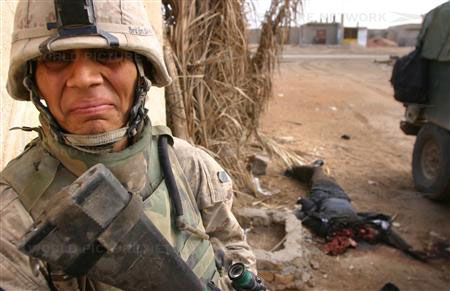
I’ve been an advocate for veterans receiving the necessary care for PTSD since before this series of wars began. I have a personal stake in it. I went years with all the symptoms of either a psychotic and anti-social man or someone who was experiencing the after effects of being in combat.
Unfortunately, my wife and kids paid the price as well. Between the angry outbursts and the attempts to off myself, they became the secondary victims of PTSD. It’s no mistake or nothing unusual both my kids became addicted to cocaine. There’s no surprise in all the emotional upheavals they faced growing up.
When I finally started treatment, I’d been out of combat over 12 years but could vividly see each bit of the Tet Offensive I was part of in my dreams or my intrusive thoughts. I had constant flashbacks. I had two lives. The life before Vietnam and the life after Vietnam. One day I was 18 entering Vietnam…a year and a month later, I was some 40 year old man in the body of a 19 year old.
I worked to educate people about PTSD, once I understood it. Before the most recent war, I asked two brothers who had been in Vietnam to visit a peace and justice group to talk about the troops returning once war started. We spoke about Vets4Vets and setting up free community therapy.
The group loved our ideas but we never heard back from them. Two years after the war had begun and many suicides and homicides later, a church allowed me to put on a full day seminar about PTSD for community members.
It was well received by the 25-30 who showed up on short notice. We talked about other seminars or talks.
Since that time I’ve had many discussions with groups wanting to do something but feeling PTSD doesn’t have much community appeal like an Iraq veteran or an Iraq woman might have.
Now, it’s been proposed we do a “fun run” for PTSD. Maybe a carb dinner the night before. We should invite regular community members, churchgoers and people outside the peace community. They propose we keep away from “radical” advertising in the community.
Basically, I’m being asked to do a seminar on the issue of combat PTSD without mention of my affiliations with veteran peace groups.
The day after I received this proposal, I read of the military sending unfit soldiers and Marines back into combat situations. These men and women were struggling with PTSD symptoms but because of the needs of the military to carry out the mission of fighting they were cleared for duty by commanders having the last say over the recommendations of mental health experts.
The leading Army mental health expert acknowledges the use of antidepressants by soldiers in a combat zone to treat the PTSD symptoms. She admits the military mission takes precedence over any personal consideration. And, amazingly, she feels field commanders are very aware of mental health issues and make good decisions before sending a soldier back into combat.
The alleged expert admits the suicide rate has dramatically risen but says it’s hard since everybody has a weapon over there.
Others in the mental health community deplore the use of antidepressants in such a situation because as the medicine lifts the energy level of the patient it increases possibility of carrying out suicide or homicide.
The military refuses to allow the enlistment of anybody struggling with PTSD but seems to have little problem with redeploying soldiers and Marines with combat induced PTSD.
I’ve been preaching we can pay the price now in treating the trauma of returning vets as soon as possible or we’ll treat it later in the form of increased suicide, homicide, crime, spouse abuse, child abuse, addiction, homelessness, joblessness, poor adaptive skills, poor impulse control, incarcerations and a litany of other problems that will affect all of us.
Over and over I hear the issue isn’t one of those issues that will draw a crowd to listen to someone about interventions, prevention, treatments and awareness of PTSD.
We don’t want to make it too serious. We don’t want to upset. We need to make it fun. We have to avoid radical statements to appeal to an audience.
I have to say this denial of peace and justice groups to the epidemic symptoms of trauma that will occur begins to grind on me. I look at my grown children, still struggling from the effects of my toxic world following Vietnam and I fear another generation of kids damaged like them.
It angers me to hear the bullshit arguments about how we should present the issues mentioned to the community. The same community that fails to look up when a wife is killed in some military base by a returning veteran of combat. The same community that cares more about the American Idol than the suicide of the neighbor son or daughter who had been to Iraq or Afghanistan.
Isn’t it about time the American people got jolted with the effects of the war on another generation of the young sent to an immoral war?
Fuck fun runs and avoiding radical commentary. I understand the rationale but I have no patience for this kind of deception. Let’s not admit we work for a veterans group that wants peace. Let’s hide who we are….No, I don’t think so.
We need to demand treatment for the American veterans and for their families. We need to heighten the awareness of this problem without deception. There’s no sugar coating what will happen without treatment.
We have to wake up to that reality. And then we need to address the PTSD of Iraqi children, innocent men and women and all who have been affected by our preemptive and illegal wars.
I think it’s time to quit with evasive behaviors and time to assert and advocate in a radical way for the troops struggling with PTSD.
Terry Leichner, RN (Psychiatric Nurse Specialist)
VVAW
Subscribe to:
Posts (Atom)


 Posts
Posts